How to choose an air fryer: size, style and features explained

An air fryer is a compact countertop convection oven: a fan moves hot air quickly around the food, so fries, wings, vegetables and leftovers come out crisp with little or no added oil. They are easy to use, but the range of sizes and styles can make choosing one harder than it should be. This guide walks through the decisions in the order that matters most.
The short version: pick the style first (basket or oven), then the capacity for your household, then check wattage, the controls and how easy it is to clean. Everything else is a nice extra.
1. Basket or oven style?
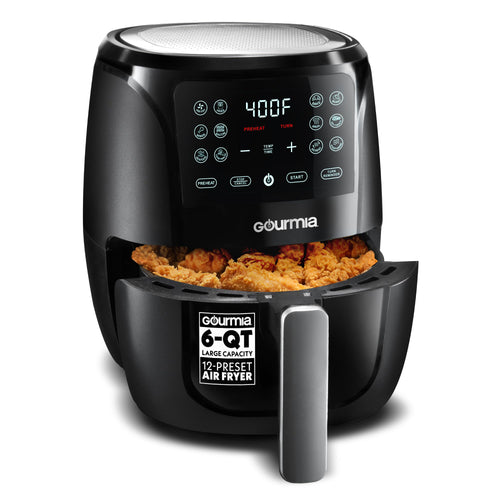
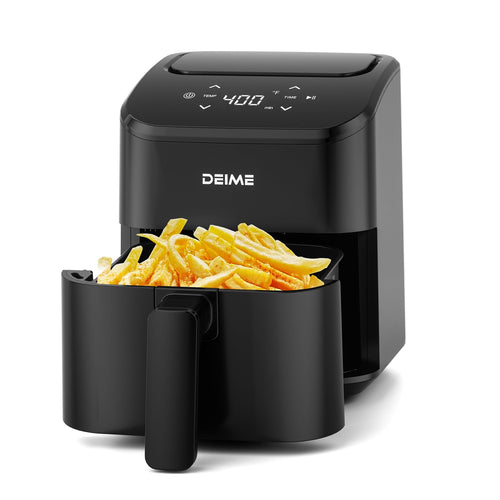
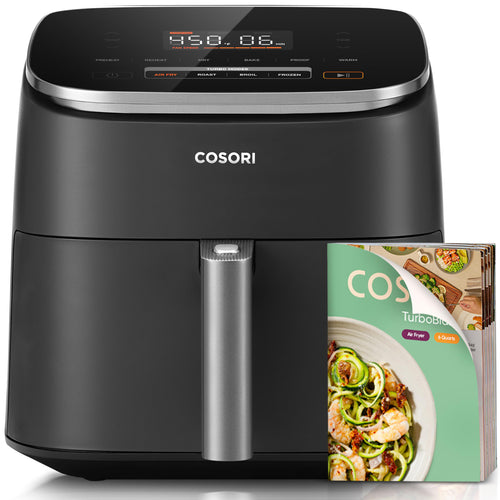
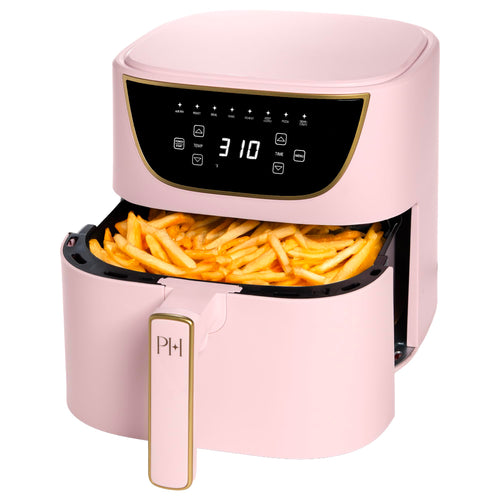
Basket air fryers have a pull-out drawer with a removable crisper plate. They heat up fast, take little counter space and are the easiest to clean. You shake the basket halfway through cooking to brown food evenly.
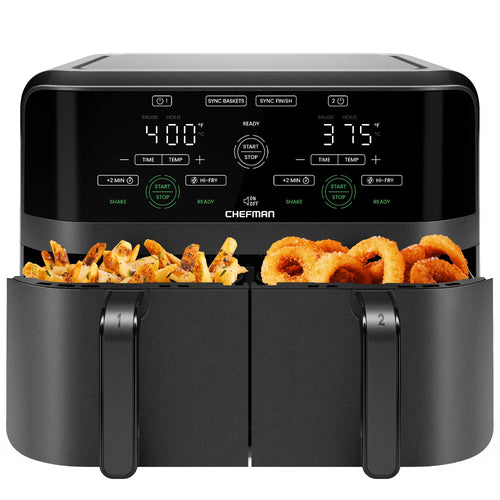
Dual-basket models have two independent drawers. You can cook two foods at different temperatures and set both to finish at the same time, which is handy for a main and a side. They are wider, so measure your counter.
Oven-style air fryers look like a small toaster oven with shelves, and often add functions such as bake, toast, dehydrate or rotisserie. They hold flatter foods in more than one layer and let you see the food through a glass door, but they take longer to clean and more space to store.
2. Capacity: how many quarts do you need?
Capacity is listed in quarts. As a rough guide:
| Household | Typical capacity |
|---|---|
| 1–2 people, sides and snacks | 2–4 quarts |
| 2–4 people, everyday meals | 4–6 quarts |
| 4 or more people, or batch cooking | 6–8 quarts, or a dual-basket model |
The quart number is only part of the story. Food crisps best in a single layer with space around it, so the floor area of the basket matters as much as its depth. If the product page lists the basket's inside dimensions, compare them with what you cook most: a 4-quart basket might hold a pound of fries comfortably but only a few chicken thighs side by side.
3. Wattage and your kitchen outlet
Most air fryers draw between about 1,200 and 1,800 watts. Higher wattage generally means faster heating and better recovery when you open the drawer. Keep in mind that a typical 15-amp kitchen circuit has a limit, so running a 1,700-watt air fryer on the same circuit as a kettle or toaster at the same time can trip the breaker. Most manuals also ask you to plug the appliance directly into a wall outlet rather than an extension cord.
Look for a UL or ETL mark on the product or in its listing. It shows the appliance has been tested to U.S. safety standards by a nationally recognized testing laboratory.
4. Controls and presets
- Temperature range: most models go from roughly 180°F to 400°F. A low setting is useful for reheating and dehydrating.
- Timer: look for one that runs to at least 60 minutes and shuts the heat off automatically.
- Presets: buttons for fries, chicken or fish are convenient starting points, but most cooks end up using manual time and temperature.
- Shake reminder and preheat: small features that make results more consistent.
- Dial or digital: dials are simple and quick; digital controls are more precise and easier to wipe clean.
5. Coatings and basket materials
Most baskets have a nonstick coating, either a traditional PTFE-based coating or a ceramic one. Both release food easily when treated well. To keep a coating in good shape, use silicone or wooden utensils, avoid abrasive pads, and skip aerosol cooking sprays, which many manufacturers say can build up on and damage nonstick surfaces; a light brush or mist of oil from a refillable bottle works better. Some models offer stainless steel baskets or glass cooking chambers if you prefer to avoid coatings altogether.
6. Cleaning and daily use
The air fryer you clean easily is the one you will keep using. Check whether the basket and crisper plate are dishwasher-safe, whether the plate lifts out without tools, and whether the inside of the drawer has deep corners where grease collects. After cooking, let the basket cool, then soak it in warm soapy water for a few minutes before washing. Wipe the heating element area occasionally with a damp cloth once the unit is cold and unplugged.
7. Size, noise and placement
Measure the space before you order: height under your upper cabinets, depth of the counter and the width you can spare. Air fryers vent hot air from the back or top, so leave the clearance the manual recommends, usually several inches, and do not run one under a low cabinet. The fan makes a steady hum similar to a microwave; if noise matters to you, check the listing or reviews for comments about it.
8. Extras worth paying for (and ones to skip)
- Worth it for many households: a viewing window, a dual-zone "finish together" function, a reheat or dehydrate mode, and accessories such as a rack for a second layer.
- Nice but optional: app control, rotisserie spits and dozens of presets. They add cost and parts to clean, so choose them only if you will use them.
Getting the best results
- Preheat for a few minutes when the recipe calls for it.
- Do not overfill the basket; cook in batches instead.
- Shake or turn food halfway through.
- Pat vegetables dry and use a light coat of oil for browning.
- Start checking a few minutes early the first time you cook a new food, since every model runs a little differently.
Air fryer checklist
- Style fits my cooking: basket, dual-basket or oven.
- Capacity and basket floor area match my household.
- Wattage is right for my kitchen circuit, with a UL or ETL mark.
- Temperature range, timer and auto shut-off are clear.
- Basket and plate are easy to clean, ideally dishwasher-safe.
- It fits my counter with the recommended clearance.
Ready to compare?
Browse Home & Kitchen or shop by department to see all 13 departments. Every order ships free to U.S. addresses, and unused items can be returned free within 30 days of delivery. See our returns page for how it works.